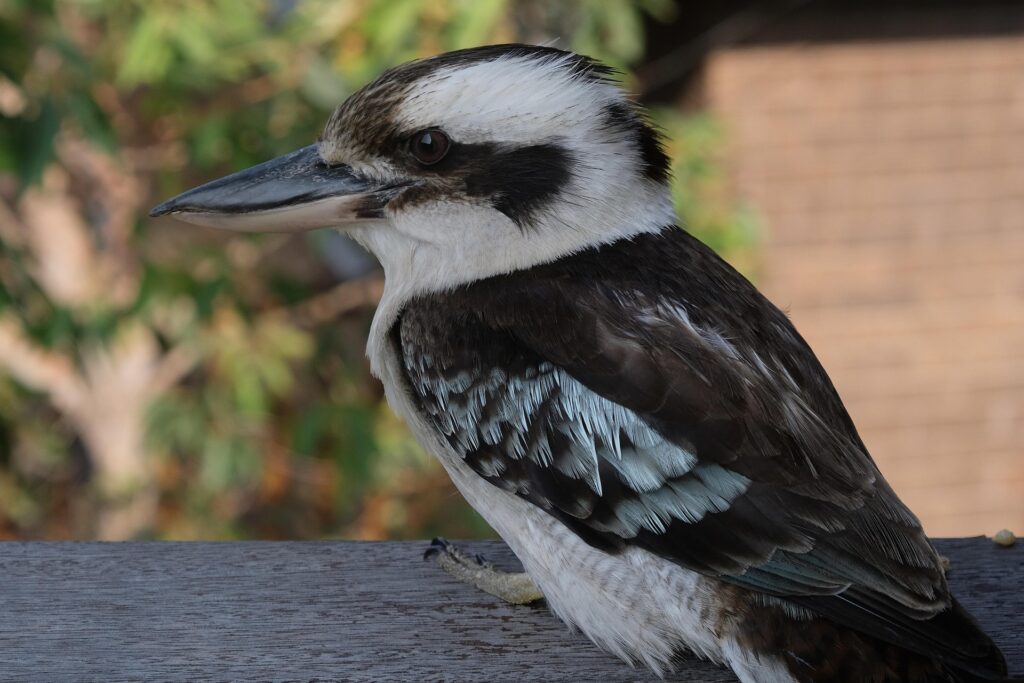
The kookaburra—scientifically known as Dacelo novaeguineae—is one of those birds that grab your attention even before you can identify it. Its robust silhouette, the way it moves, and its distinctive method of communication make it a fascinating animal to observe and learn about.
When discussing the characteristics of the kookaburra, we are not referring solely to its physical appearance. Its behavior, daily habits, and certain fascinating facts also come into play, helping to explain why it sparks such curiosity among nature lovers.
What makes the kookaburra special?
The kookaburra belongs to a group of birds known for their strong personalities and highly recognizable presence. Its image is often associated with expansive natural settings, where it can perch calmly and keep watch over its surroundings.
One of the reasons it is so interesting is that it combines a compact appearance with a very active demeanor. It is not a bird that goes unnoticed; its posture, its sounds, and the way it interacts with its surroundings make it a species that really catches the public’s eye.
Observing the kookaburra reveals that, in nature, appearance and behavior often tell the same story: adaptation, alertness, and efficiency.
Most recognizable physical characteristics
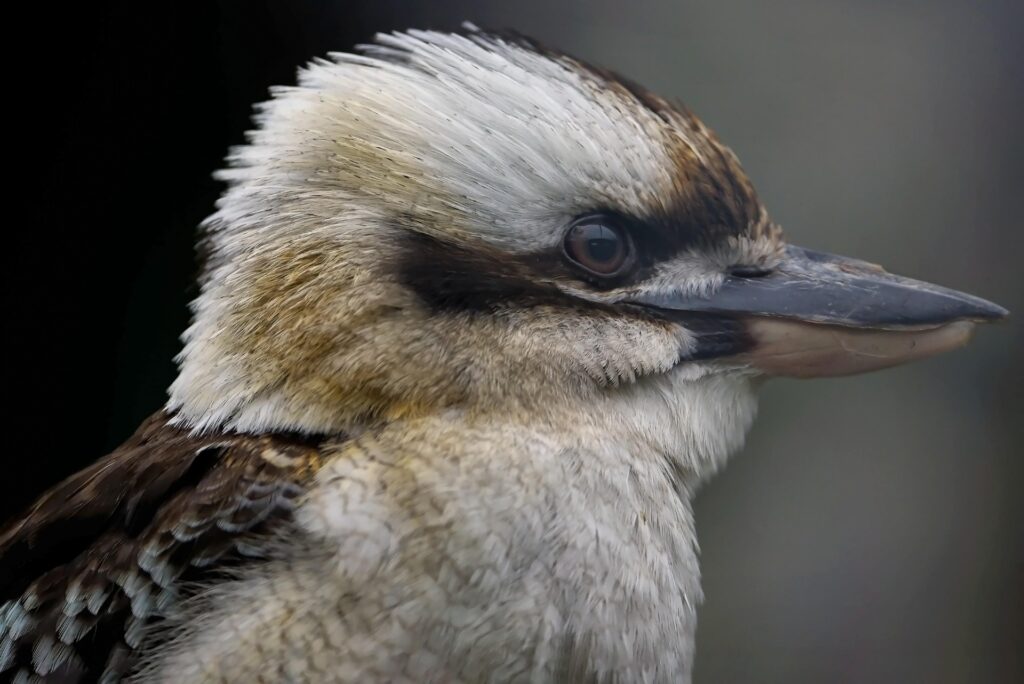
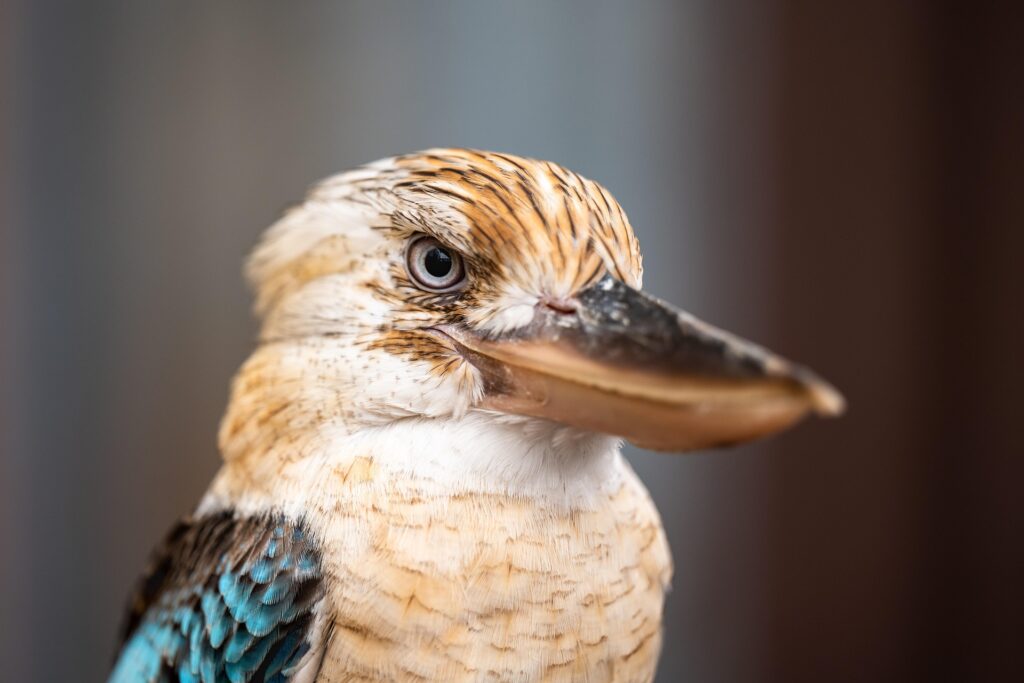
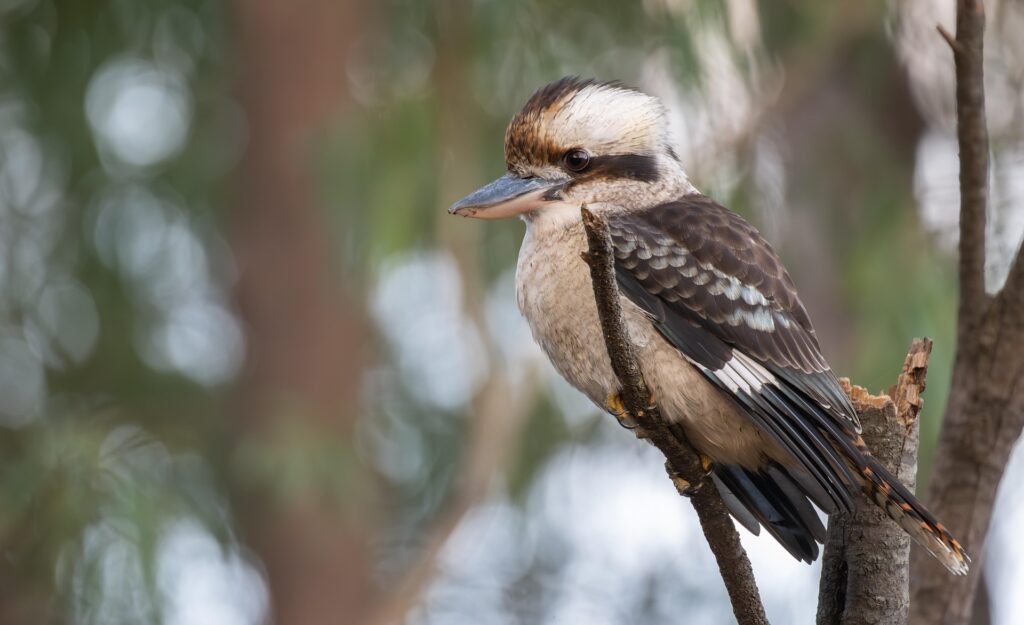
If there is anything that defines the kookaburra, it is its robust body and steadfast bearing. It has a large head in proportion to its body, a strong beak, and an expression that conveys constant alertness. That combination gives it a truly distinctive appearance among birds.
Its plumage typically displays understated tones that help it blend into its surroundings. It does not seek to go unnoticed for the sake of elegance, but rather for functionality: camouflage is a useful tool for survival and safe movement.
Features that help identify it
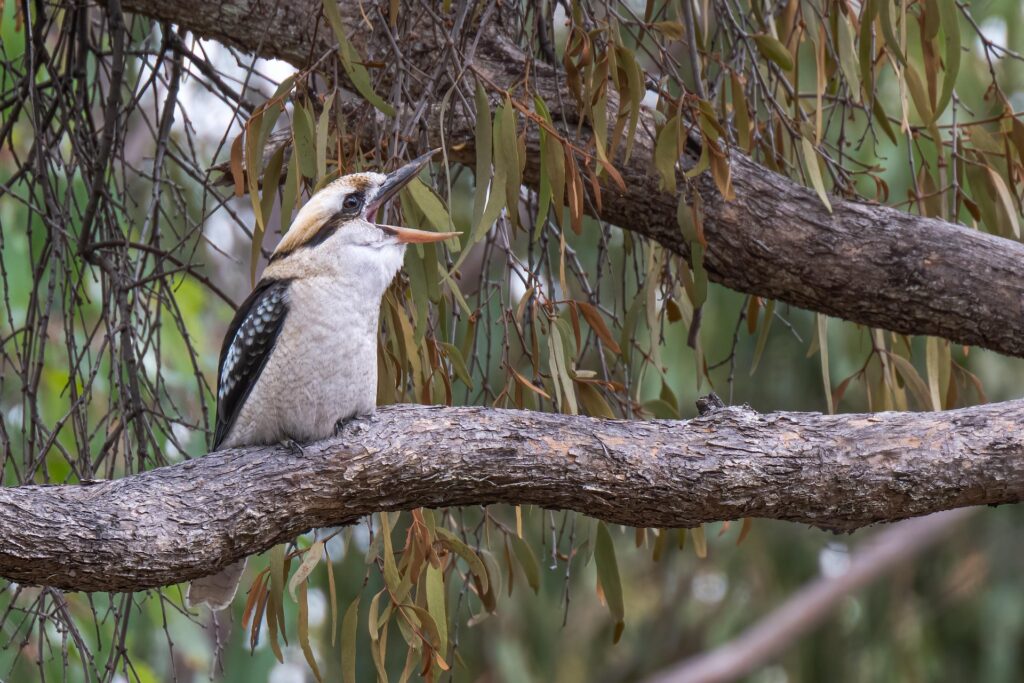
- Compact and robust body.
- Powerful and well-developed beak.
- Upright and alert posture.
- Plumage with tones that aid in camouflage.
- A very distinctive expression, easy to remember.
These physical characteristics of the kookaburra serve not only to identify it but also to understand its way of life. Every detail of its anatomy is linked to how it feeds, moves, and protects itself.
Behavior and lifestyle
The kookaburra is notable for its highly expressive behavior. It tends to appear alert and territorial, exuding an air of confidence. It is not a shy bird; on the contrary, its demeanor often suggests that it is in complete command of the space it occupies.
It is also known for its way of communicating. Its vocalizations are an essential part of its identity and help maintain contact with other individuals, signal its presence, and reinforce its role within its environment.
Habits that tend to attract attention
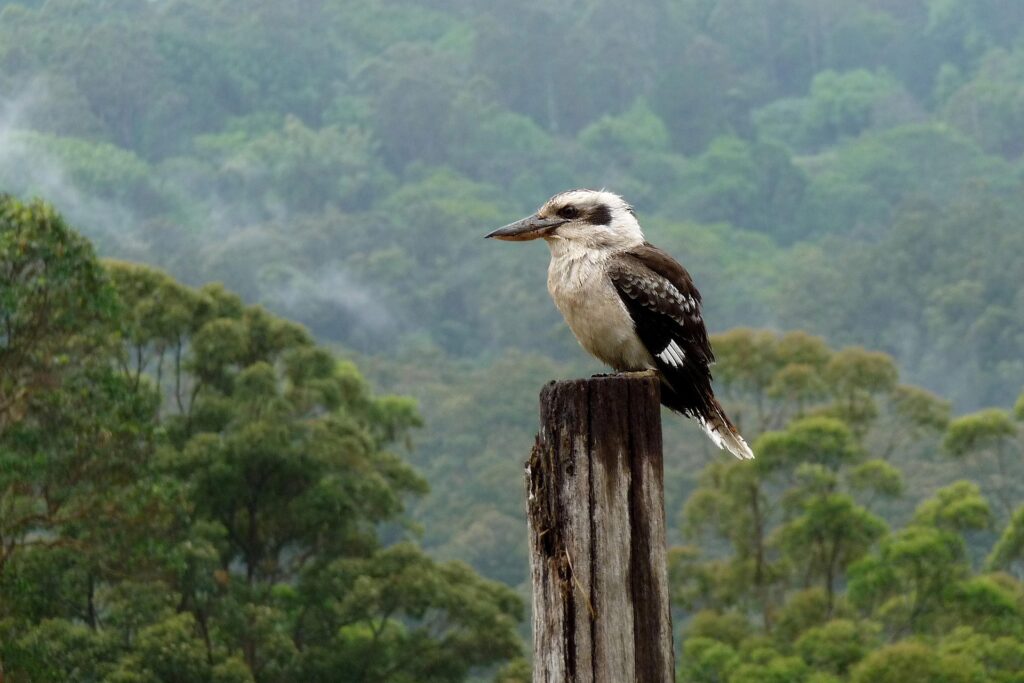
- He remains attentive to what is happening around him.
- It perches in elevated spots to better monitor its surroundings.
- It emits very recognizable sounds.
- It may exhibit territorial behaviors.
- Alternate moments of stillness with periods of activity.
This balance between observation and action explains why the kookaburra is so interesting to bird enthusiasts. It is not only a beautiful animal but also a clear example of adaptation to its environment.
Nutrition and relationship with the environment
The kookaburra’s diet reflects its nature as an opportunistic hunter. Its strong beak enables it to handle various types of food, depending on what is available in its habitat.
Beyond the specific diet, the important thing is to understand that its feeding behavior follows a very practical logic. It seeks efficiency, seizes opportunities, and adapts to what the environment offers.
In nature, that capacity for adaptation is key. A bird that knows how to read its environment has a better chance of remaining active, conserving energy, and responding effectively to the changes occurring around it.
Observing a bird’s feeding behavior helps to understand how each species has evolved to take advantage of its environment in the most efficient way possible.
Interesting facts that help you get to know him better
To speak of the kookaburra is also to speak of fascinating quirks. Its popularity stems not only from its appearance but from a combination of traits that make it memorable. It is one of those birds that leaves a lasting impression on anyone who sees it.
Among the most interesting curiosities is its ability to make a powerful impression using seemingly simple means: posture, sound, and presence. Sometimes, a grand display of color is not required to stand out in the animal world.
Aspects that often come as a surprise
- His voice can be as recognizable as his silhouette.
- Their behavior conveys a great deal of confidence.
- Its robust appearance is closely linked to its lifestyle.
- It is a bird that sparks interest in both children and adults.
- Observing them allows us to learn about animal adaptation and communication.
These fascinating traits make the kookaburra a perfect species for introducing the public to biodiversity in a simple and engaging way. The more one learns, the easier it becomes to appreciate the value of every detail.
Why it is worth observing it calmly
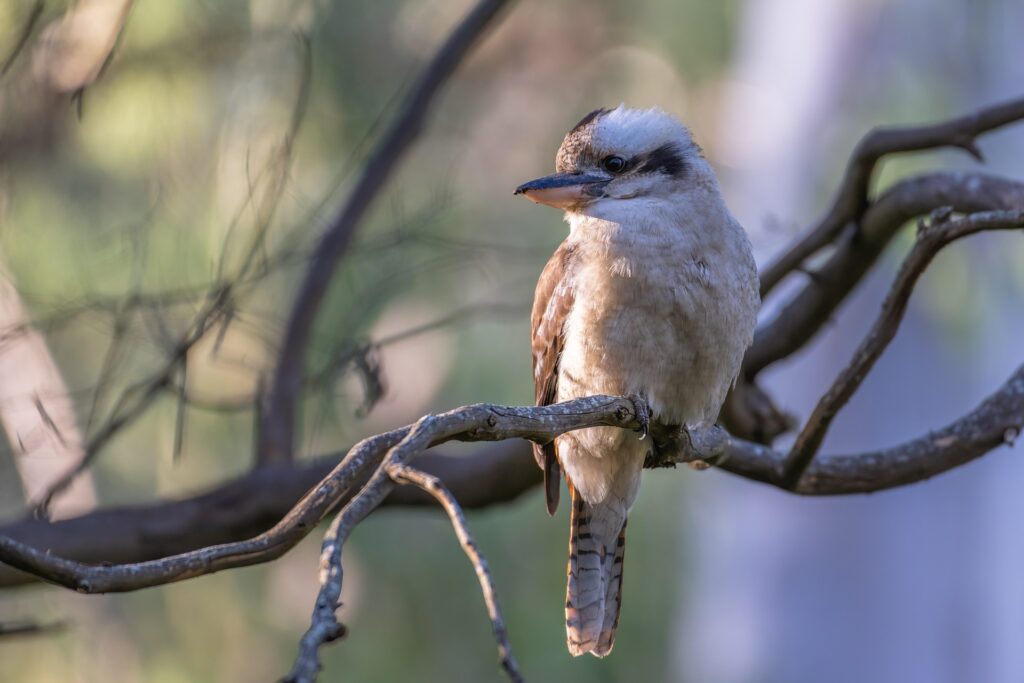
The kookaburra is not merely a curious bird; it is an opportunity to observe nature more closely. Its presence invites us to pause, observe, and discover how each species develops unique solutions to live in balance with its environment.
When we analyze the characteristics of the kookaburra, we see that everything fits together: its physical traits, its behavior, and the way it interacts with its environment form a coherent whole. That coherence is precisely what makes it so interesting from an educational and outreach perspective.
For those visiting wildlife sanctuaries or simply curious about birds, getting to know the kookaburra is an excellent way to start seeing things with fresh eyes. Often, the most fascinating species are those that combine apparent simplicity with a wealth of detail.
Ultimately, the kookaburra stands out for its personality, its presence, and the ease with which it leaves a lasting impression. Understanding its physical characteristics and behavior is a way to connect more deeply with the natural world and enjoy it with greater awareness.