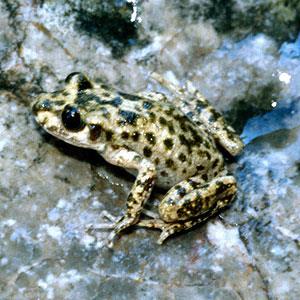
The Mallorcan midwife toad is one of Mallorca’s most unique species and, at the same time, one of the most discreet. It inhabits very specific corners of the island, and its presence speaks volumes about the quality of the ecosystems it lives in.
To speak of the ferreret is to speak of biodiversity, natural balance, and shared responsibility. Although it may go unnoticed by many, its conservation is of enormous value to Mallorca’s natural heritage.
What is a ferreret?
The Mallorcan midwife toad is an amphibian endemic to Mallorca, meaning it only lives naturally on this island. This makes it a particularly valuable species, because its survival depends directly on the conservation of its local environment.
When a species is endemic, its loss doesn’t just affect a specific place: it represents the disappearance of a unique part of the planet’s biodiversity. That’s why the ferreret is not just a small and curious animal, but a symbol of the fragility and richness of island ecosystems.
Protecting the ferreret is protecting an irreplaceable part of Mallorca’s nature.
Where does he/she live and what does he/she need to survive?
The ferreret lives in very specific environments on the island, usually linked to rocky areas, streams, and enclaves with suitable humidity and shelter. It is not a species that appears in just any landscape; it needs specific spaces to thrive.
Its presence is linked to places where it finds protection from abrupt changes and where it can maintain its life cycles. This explains why habitat alteration, human pressure, or loss of environmental quality can significantly affect it.
A very delicate habitat
Amphibians are often good indicators of the state of ecosystems, and the Iberian wall lizard is no exception. Its sensitivity to environmental changes makes it a species that helps to gauge the health of its habitat.
When a habitat is well preserved, the ferreret can find shelter, food, and the necessary conditions to survive. When that balance is disrupted, the species notices it sooner than other, more generalist animals.
- It needs adequate natural shelters.
- It depends on environments with stable environmental conditions.
- It is affected by habitat degradation.
- Its presence indicates ecological value in the environment.
FERRERET AT MARINELAND MALLORCA
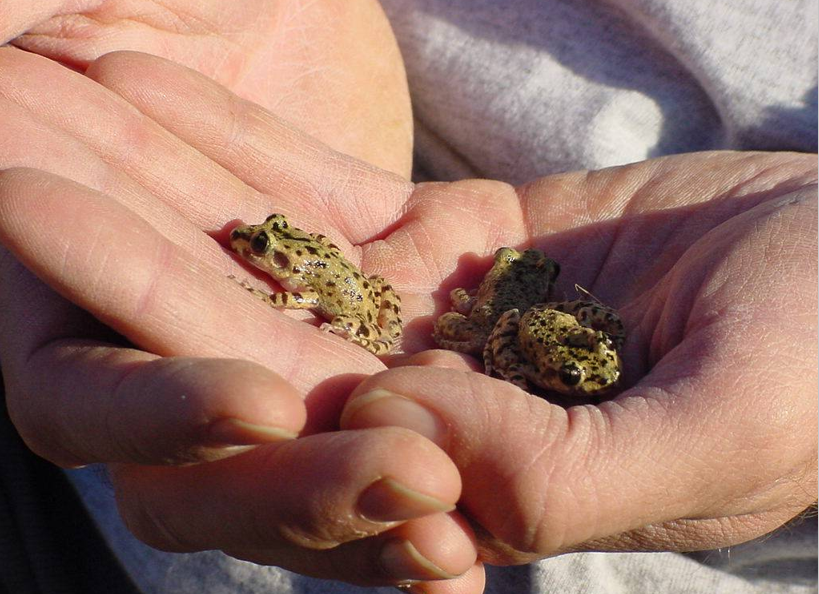
During your visit to Marineland Mallorca, next to the tropical house, there is an area dedicated to the Ferreret, the small amphibian endemic to the Balearic Islands. Here you can learn about it and see it up close. This species was discovered from fossil remains in 1978, and the first live specimens were found later, in 1980. Mallorca is the only place in the world where this species lives.
According to scientists, the Ferreret (Iberian pygmy owl) was once widely distributed across the island, but the arrival of humans and the introduced fauna have profoundly altered the living conditions of this species. We have reached a point where only a very small number of populations survive. For this reason, for the past 28 years, the Ferreret has been the subject of a recovery plan promoted by the Balearic Government to ensure the survival of this species and increase its numbers. Currently, more than a thousand animals born in our facilities have been released into their natural habitat in the Serra de Tramuntana mountains.
Why is it so important for Mallorca?
The importance of the Mallorcan midwife toad goes far beyond its rarity. As a species exclusive to Mallorca, it forms part of the island’s natural heritage and represents a direct conservation responsibility for those who live there and for those who visit.
Its value is also ecological. Each species fulfills a function within its environment, and the disappearance of one can disrupt the whole. Conserving the ferreret means contributing to maintaining more stable and diverse natural ecosystems.
An emblem of conservation
The Mallorcan midwife toad (ferreret) has become a benchmark when discussing the protection of native wildlife in Mallorca. Its case serves as a reminder that conservation is not just about protecting beautiful landscapes, but about preserving specific species and the processes that make them possible.
Furthermore, their story helps raise awareness about the importance of acting responsibly in natural spaces. The more attention we pay to species like this, the easier it becomes to understand that biodiversity is not an abstract concept, but something living and close to us.
The conservation of an endemic species is also the conservation of the natural identity of a territory.
What threat to such a special species?
Endemic species typically have less room for adaptation because they live in limited areas. In the case of the ferreret, any alteration to its environment can have significant consequences, as it does not have a wide distribution that would allow it to easily compensate for changes.
The most common threats to this type of species are usually related to habitat degradation, alteration of natural conditions, and pressure on the areas where it lives. That’s why conserving the territory is just as important as directly protecting the animal.
The importance of looking at the whole environment
Protecting the ferreret isn’t just about observing the animal. It also involves caring for the water, the vegetation, the natural shelters, and the tranquility of the areas where it lives. In nature, everything is connected.
Therefore, when discussing conservation, it’s important to consider the entire ecosystem. If the environment remains healthy, the species has a better chance of continuing to be part of Mallorca’s landscape.
- Preserving the habitat is essential for their survival.
- Reducing impacts on sensitive areas helps maintain balance.
- Environmental education improves the understanding of its value.
- The conservation of endemic species strengthens local biodiversity.
How to help preserve the ferreret
The conservation of the ferreret depends on coordinated actions and a respectful attitude towards natural spaces. Although it may not always be visible in daily life, every responsible gesture counts when it comes to protecting such delicate species.
Education also plays a fundamental role. Getting to know the ferreret (a type of Mallorcan wildcat), understanding where it lives, and knowing why it is important helps to generate a more conscious relationship with the nature of Mallorca.
- Respect natural spaces and their access points.
- Avoid disturbing sensitive habitats.
- Support education and conservation initiatives.
- Disseminate reliable information about native fauna.
It’s also helpful to take a broader view of the island. Mallorca is not just a tourist destination; it’s a territory with valuable biodiversity that needs a balance between enjoyment, understanding, and protection.
A small animal with great value to the island
The Mallorcan midwife toad reminds us that the importance of a species is not measured by its size, but by its role in the ecosystem and its uniqueness. In Mallorca, its existence represents an essential part of the island’s natural identity.
Getting to know it is the first step to appreciating it. Protecting it is a way to safeguard the future of Mallorca’s biodiversity and to keep alive a natural legacy that cannot be replaced.
At Marineland Mallorca, talking about wildlife and conservation is also an invitation to observe nature more closely. Because every species matters, and the Mallorcan midwife toad is one of the most valuable of all those that make Mallorca a unique place.